
 >
>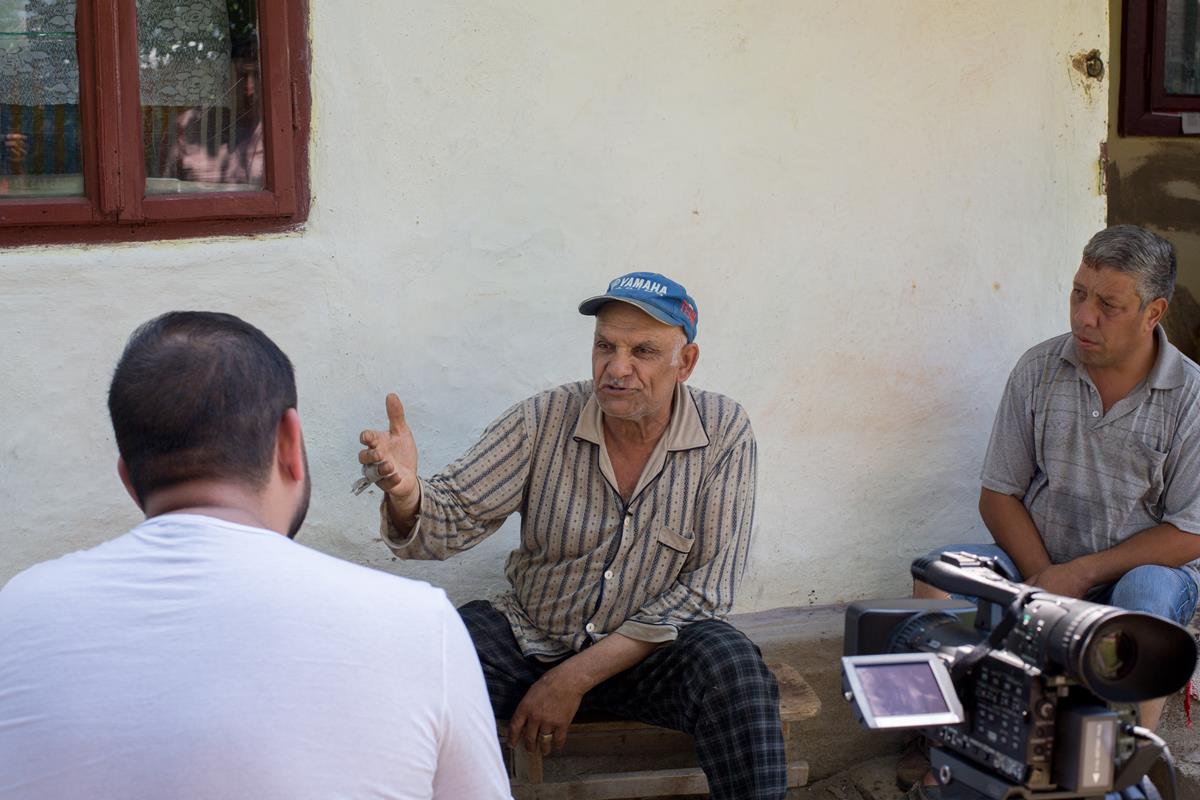
Name of the town: Dolheștii Mici (village, commune of Dolhești)
Region, country: Suceava County, Moldova region (Romania)
Date of deportation: September 1942
Excerpt from testimony:
“Later, the Roma were relocated to Berezovka, into dugouts. Eight families were housed in one small house. Quarrels broke out among the Roma over a place in the house. Two local Russians patrolled the camp to collect the bodies of the dead and bury them in a mass grave. The interviewee’s mother was taken away to work digging the graves.”
Romanian archives (if they exist):
Unfortunately, no archival documents related to the Roma deported from Dolheștii Mici have been identified.
Historical note on the Roma:
The village of Dolheștii Mici (formerly Gioseni) is part of the commune of Dolhești and is located approximately 70 km from the city of Suceava. Several Roma families lived in the village, some of whom worked in ironsmithing or agriculture. Around 1900, the village of Dolheștii Mici had 343 families, or 1,053 inhabitants (MDGR 1900, 3: 170). More detailed information was collected during the general census of 1930, which recorded 1,259 inhabitants in the locality, including 85 Roma (RGP 1930, II: 44-45).
Historical note on the deportation:
The interviewee’s parents were farmers and were arrested by gendarmes while they were in the area of the village of Budeni. The entire family was transported by cart to the railway station in Dolhasca, where they were loaded into freight cars and deported to Transnistria around September 16, 1942.
After an exhausting journey, the deportees arrived in Transnistria at the end of September. They were relocated to the locality of Varușcina, in Ochakov County. The deportees were subjected to forced labor, working from five in the morning until sunset. They were guarded by Ukrainian guards, who resorted to reprisals and acts of cruelty (the interviewee’s grandfather was executed because he left the column to drink water).
After a year, the Roma deportees were relocated to Berezovka County, where they lived in dugouts. They were guarded by units made up of local Ukrainians, who patrolled the region and collected the bodies of the Roma deportees for burial in mass graves.
The interviewee recalled that near the Roma’s dugouts there was a camp holding Jewish deportees from Romania.
The repatriation to Romania probably took place in the spring–summer of 1944. The Roma survivors crossed the border and arrived by train in Iași, from where they traveled on to the commune of Dolhești.
Brief note on a Roma subgroup:
The interviewee’s parents were farmers. Her grandfather, Ion, however, was a blacksmith by trade.
Categories
Features
Regions
Video
Location
Related Testimonies
Added By Catalin Biban

Please sign in to see contact details.
 Română
  English