
 >
>
Name of the town: Maia (village, commune of Maia; today Ialomița County, before 1950 Ilfov County)
Region, country: Muntenia region (Romania)
Date of deportation: June – August 1942
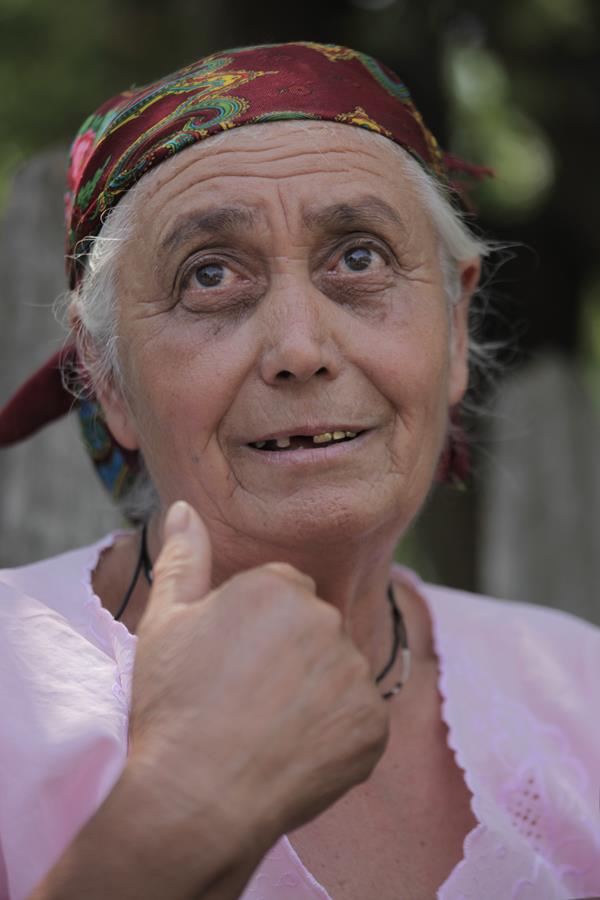
Excerpt from testimony:
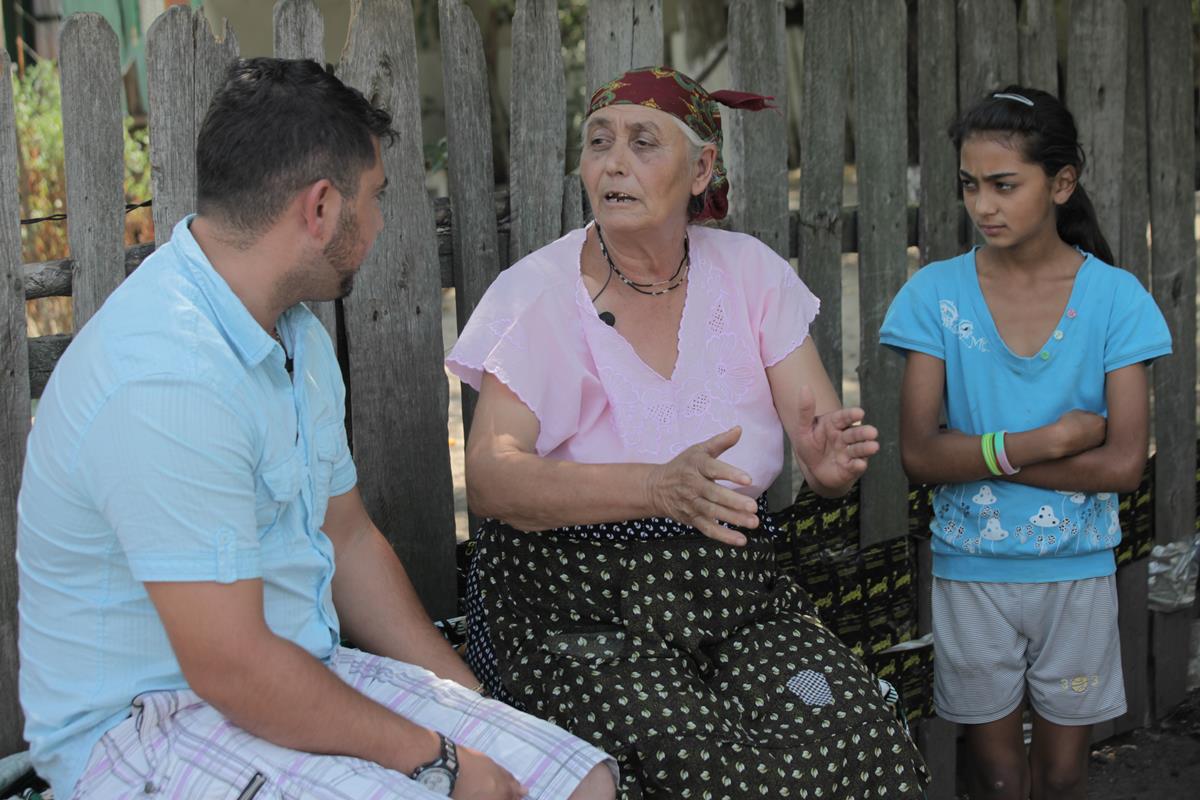
“[…] The Romanian gendarmes took all their money, telling them they would bring them food. They installed [the Roma deportees] in empty stables, located about 2 kilometers from the railway station. They cleared a corner and laid a blanket on the ground. It was autumn. They were guarded by gendarmes.
They drew water from the Bug for drinking. There was a village nearby. They were not allowed to go into the village.
They remained in these stables for 2 months. They were given [as food rations] 2 potatoes per family, or rye to make mămăligă [corn porridge]. A Russian [guard] and a bulibașă [traditional leader] distributed the rations in mess tins. Sometimes, the deportees went to look for food in the building where supplies were stored.”
Romanian archives (if they exist):
The information provided by the interviewee is partly corroborated by archival documents. In the summer of 1942, the Ilfov Gendarme Legion drew up a nominal list of Roma families proposed for deportation to Transnistria. On this list appears Filofteia Vasile (possibly her maiden name), daughter of Ștefan C. Vasile, included on the county’s deportation list together with his wife and their 6 children (Romanian national archives (ANI), General Inspectorate of the Gendarmerie fonds (fond IGJ), file no. 202/1942: f. 223).
Historical note on the Roma:
At the beginning of the 20th century, the commune of Maia, located approximately 90 km from the town of Slobozia, belonged to Ilfov County. The commune comprised a single village, Maia, and had a population of 1,175 (MDGR 1901, IV: 216). The population nearly doubled in the interwar years, reaching 1,995 inhabitants, of whom 31 were sedentary Roma, according to the general census (RGP 1930, II: 260-261). Alongside them, a few families of ursari Roma (Roma who traditionally worked as bear-handlers) also settled in the village. The interviewee’s family owned a house in the village but traveled seasonally by cart across the country (to Timișoara, Arad, and Iași) to practice their traditional occupation—namely, the training of bears.
Historical note on the deportation:
The interviewee’s family was probably registered in May 1942 by the Ilfov Gendarme Legion and included on the list of “undesirable Roma” deported in the course of September 1942. The family was removed from its own house by the local gendarmes, who promised them they would receive a house in Transnistria, and transported by truck to the railway station in Bucharest. The family joined nearly 100 Roma rounded up from across Ilfov County and loaded into 3 freight cars, attached to the special train E3 bound for Tighina. The train departed Bucharest on September 12, 1942, and arrived in Tighina the following day (ANI, fond IGJ, file no. 126/1942: f. 126).
The interviewee’s family was relocated to an (unnamed) locality near the Bug. After all their belongings were confiscated, the deportees were housed in some stables near the railway station. The gendarmes guarding them forced them to work in the fields (harvesting potatoes), giving them in exchange a few potatoes or a little rye flour per family. The meager food rations and the lack of fuel claimed numerous victims among the deported children. Many were buried near the banks of the Bug.
It is worth noting that Filofteia Brăileanu recounts how Ukrainian guards loaded groups of Roma deportees onto cardboard boats (for more details on the “cardboard boats myth,” see Furtună 2012).
Brief note on a Roma subgroup:
The interviewee belongs to the community of ursari Roma (Roma who traditionally worked as bear-handlers). During the interview, she provided interesting details about bear training and how the ursari earned their living traveling with bears through the country’s villages and towns. After the family was deported to Transnistria in 1942, the bears remained in the native village, cared for by the villagers during the war. After the repatriation from Transnistria, the family resumed its traditional occupation until the late 1940s–early 1950s (the period of collectivization), when the communist authorities confiscated their bears.
Categories
Features
Regions
Video
Location
Related Testimonies
Added By Catalin Biban

Please sign in to see contact details.
 Română
  English