
 >
>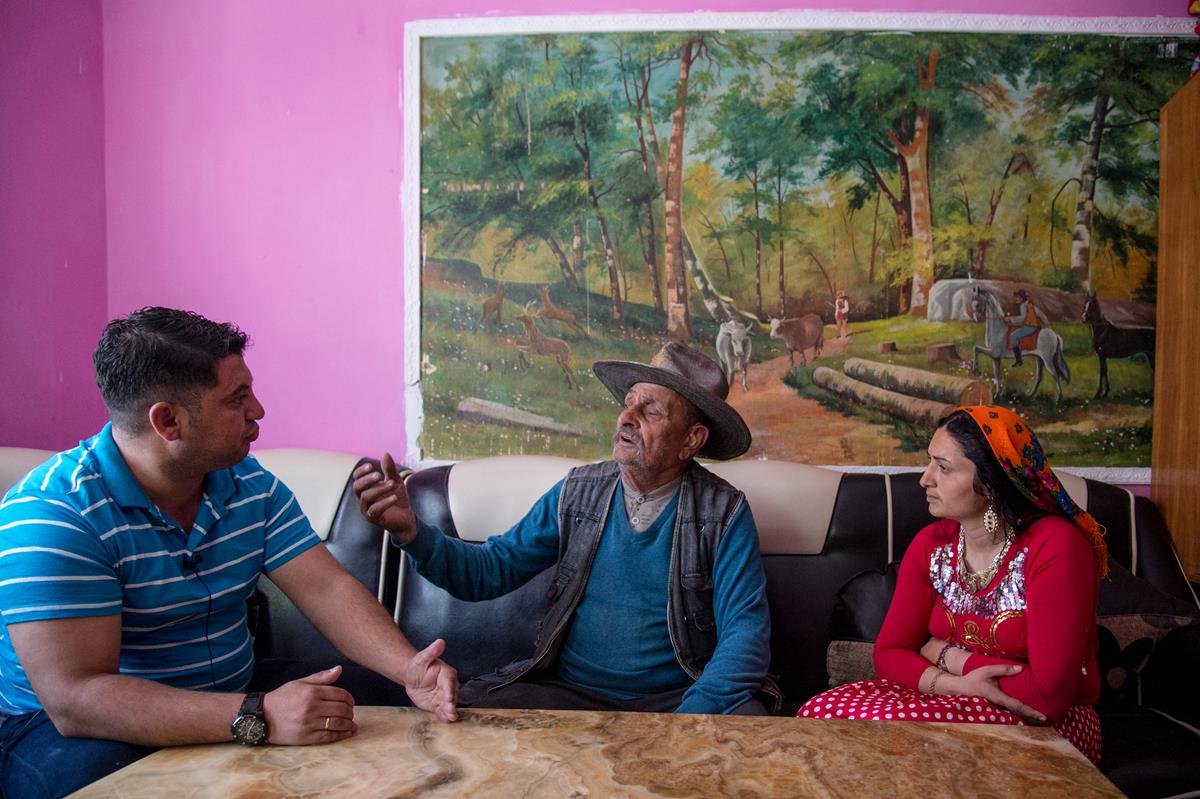
Name of the town: Călărași (city)
Region, country: Călărași County, Muntenia region (Romania)
Date of deportation: June – August 1942
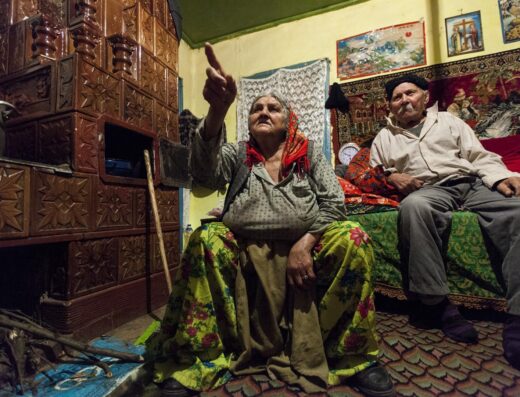
Excerpt from testimony:
“[…] They were placed in dugouts in a large field, in very harsh conditions (they slept directly on the ground). Other Roma deportees were already there.
Initially there were 15 members of the family, but only 3 of them survived. Some relatives were shot by German troops; [the family] was able to bury their bodies. The dugouts (pits dug directly into the ground) were very small. All they could get to make themselves a bed was straw from the field. The Ukrainians (referred to as ‘Russians’) came every day looking for [farm] workers, and those who resisted were beaten on the spot.”
Romanian archives (if they exist):
Unfortunately, no archival documents related to the Roma deported from Călărași have been identified.
Historical note on the Roma:
The city of Călărași (formerly the village of Lichirești, later the market town of Călărași), situated on the Borcea branch of the Danube, is the most important urban settlement in the county of the same name. The village of Lichirești, on whose site the market town was later founded, is documented around 1590. A crossing point between the Ottoman Empire and Wallachia, the village grew into a market town in the 18th century and increased its population, attracting craftsmen and merchants from Dobruja. Integrated into the Danube trade network, the market town of Călărași (as it came to be called from the 1740s onward) experienced rapid urban development in the first half of the 19th century (Panait 1985, 143).
Alongside Bulgarians, Jews, and Greeks, groups of Roma also settled in the town. A statistical record from 1833 counted 15 enslaved Roma (boyar servants) in a neighborhood of the market town of Călărași (Tudor and Țiripan 2003, I: 75). At the end of the 19th century, other groups of spoitori Roma (Roma specialized in the tinning of copper vessels) settled on the outskirts of the town, brought in by the great landowners of the area to be used as agricultural day laborers. These Roma led a semi-nomadic life, traveling through the nearby villages to practice their trade (the tinning of vessels), but also performing agricultural work or making bricks and adobe. Some of them received small plots of land following the agrarian reform of 1921. The 1930 census recorded 18,053 inhabitants in the city of Călărași, including 860 Roma (RGP 1930, II.1: 230-231). Most of them lived in a neighborhood some 500 m outside the city, known as the Spoitori quarter (Tudor and Țiripan 2003, II: 39-40).
Historical note on the deportation:
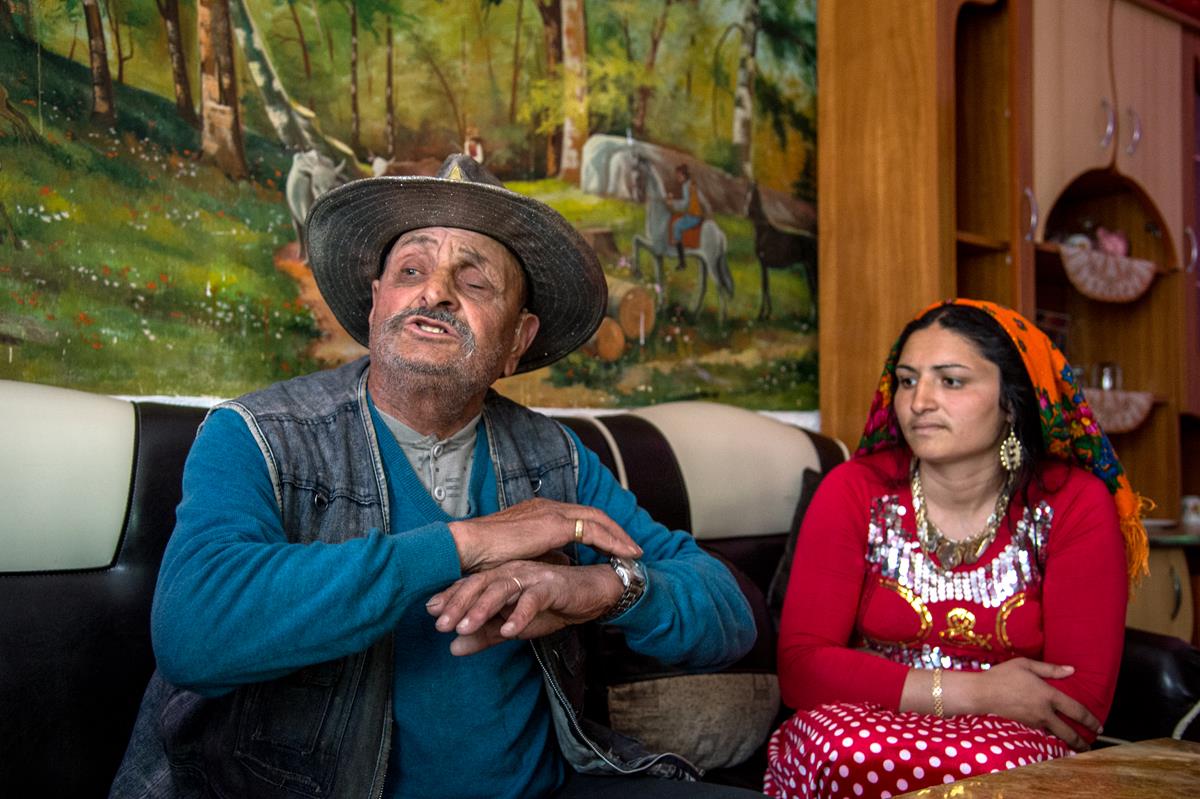
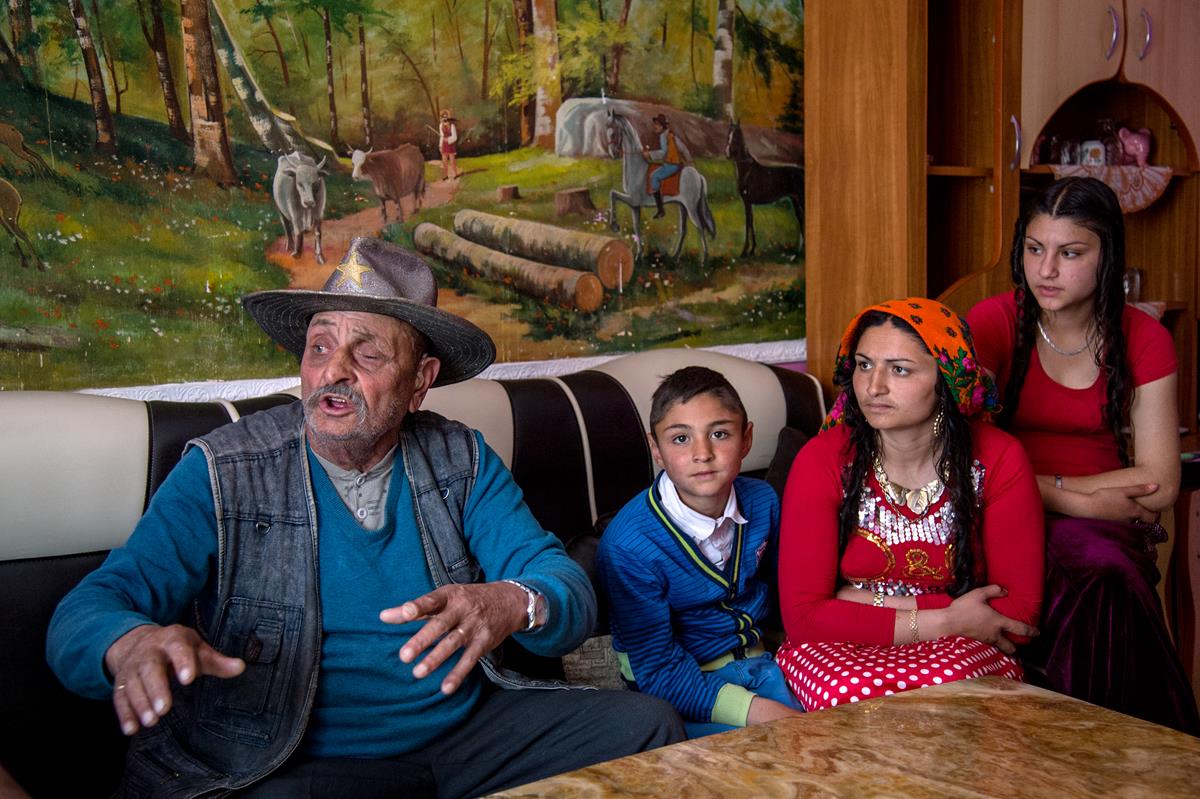
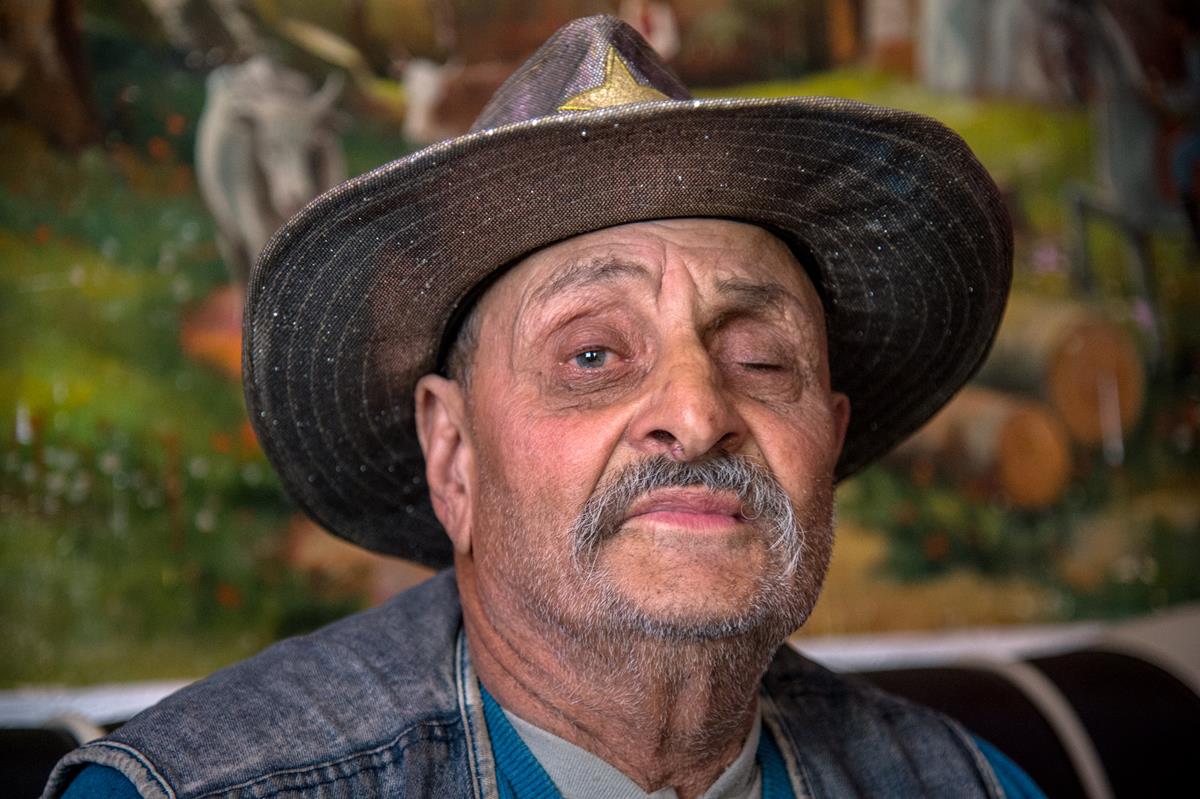
Franț Stănescu and his family (15 people in total) were arrested by gendarmes in the summer of 1942. They were deported to Transnistria in their own carts, under gendarme escort, traveling from village to village to the country’s eastern border. When they crossed the border into Transnistria, the gendarmes confiscated their belongings and money, and the Roma women were abused.
Once in Transnistria, the Stănescu family was relocated near Tridubi (Golta County), close to the banks of the Bug. They were crammed into small dugouts dug into the ground and received small monthly food rations, in exchange for which they were obliged to take part in agricultural work. A local Ukrainian came almost daily to take the deportees to work on the nearby farms. Roma who refused risked corporal punishment from the guards watching over them. Driven by the lack of food, some deportees went secretly to the neighboring localities in search of food (some went to a nearby pond to gather mussels). Many died of hunger, cold, and typhus, and their bodies were buried in mass graves. Others fell victim to the summary executions carried out by German troops, as well as to abuses (rapes and murders).
The interviewee managed to return to the country in the spring–summer of 1944, as the Soviet troops advanced into Transnistria. The journey home was long and full of hardship: in Tiraspol, Franț Stănescu lost two brothers, and in Iași his mother died. His family suffered heavy losses: of the 15 people deported in 1942, only 4 survived.
Brief note on a Roma subgroup:
Franț Stănescu belongs to the group of căldărari Roma (Roma specialized in metalworking) — or possibly of the spoitori (Roma specialized in the tinning of copper vessels).
Categories
Features
Regions
Video
Location
Related Testimonies

Added By Catalin Biban

Please sign in to see contact details.
 Română
  English