

 >
>
Name of the town: Grebănu (village, commune of Grebănu)
Region, country: Buzău County, Muntenia region (Romania)
Date of deportation: June – August 1942
Excerpt from testimony:
“[…] Along the road [to the Bug], some of the elderly deportees were executed [by gendarmes] because they could not keep pace. The interviewee was forced to abandon the body of her [deceased] daughter.
Once they arrived in Transnistria, [the Roma deportees] were housed in dugouts prepared in advance, near Tiraspol. As there was not enough space for all the deportees, about a thousand Roma were housed in a Town Hall building. They all died from the cold, since it was winter. After the winter ended, the Russians gathered their bodies and threw them into a mass grave. Later, German troops arrived and began raping Roma women. When the women gave birth, they were forced to abandon their newborn children.”
Romanian archives (if they exist):
During the census of May 1942, the Râmnicul Sărat Gendarme Legion, under whose jurisdiction the commune of Grebănu also fell, identified 52 nomadic Roma (Romanian national archives (ANI), Inspectorate of the Gendarmerie fonds (fond IRJ), file no. 60: f. 86). It is possible that the interviewee and her family were on this numerical list.
Historical note on the Roma:
Grebănu is the seat of the commune of the same name, located in Buzău County, approximately 6 km from the town of Râmnicul-Sărat. At the end of the 19th century, the commune belonged to Râmnicul-Sărat County and had 2,397 inhabitants (MDGR 1900, III: 630). The commune’s population declined in the interwar period as a result of administrative reorganizations. Thus, the general census of 1930 recorded 1,963 inhabitants, including 500 sedentary Roma (RGP 1930, II: 364-365). Alongside them, a few families of căldărari Roma, who worked in metalworking, also lived in the commune. According to the interviewee’s testimony, they traveled seasonally by cart throughout the region to sell copper objects.
Historical note on the deportation:
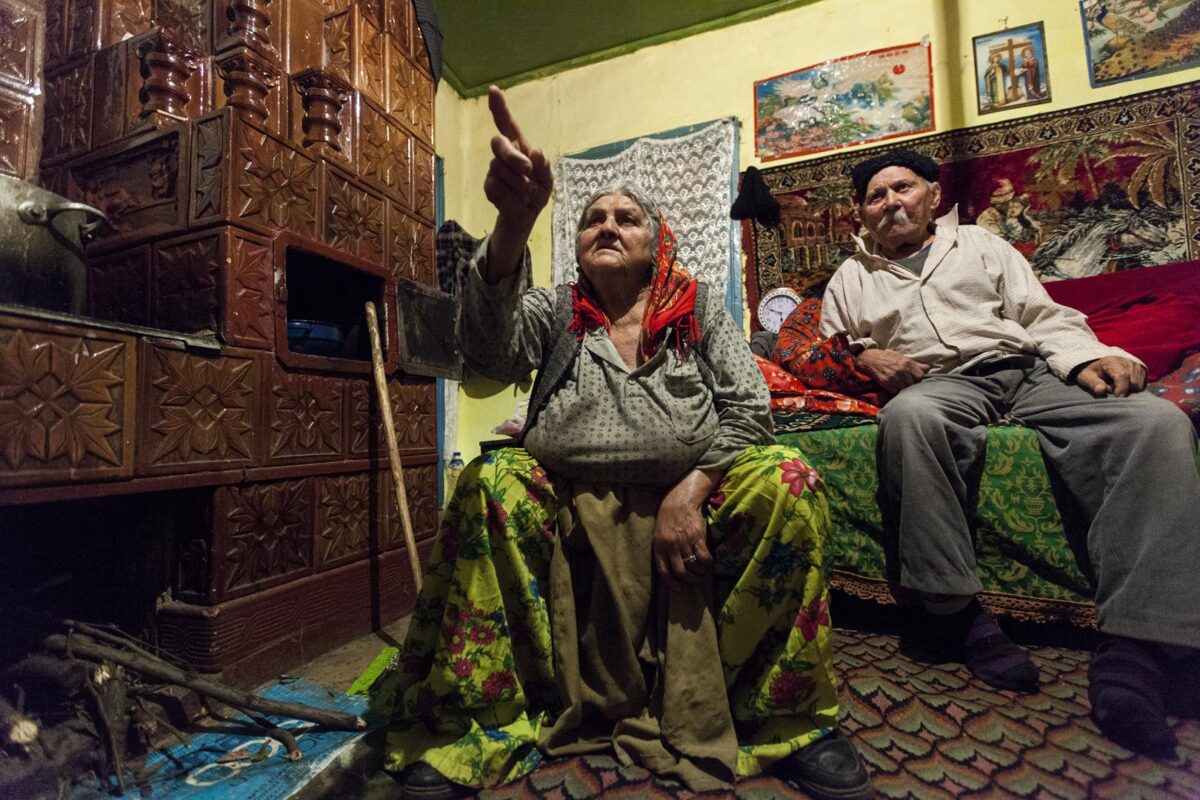
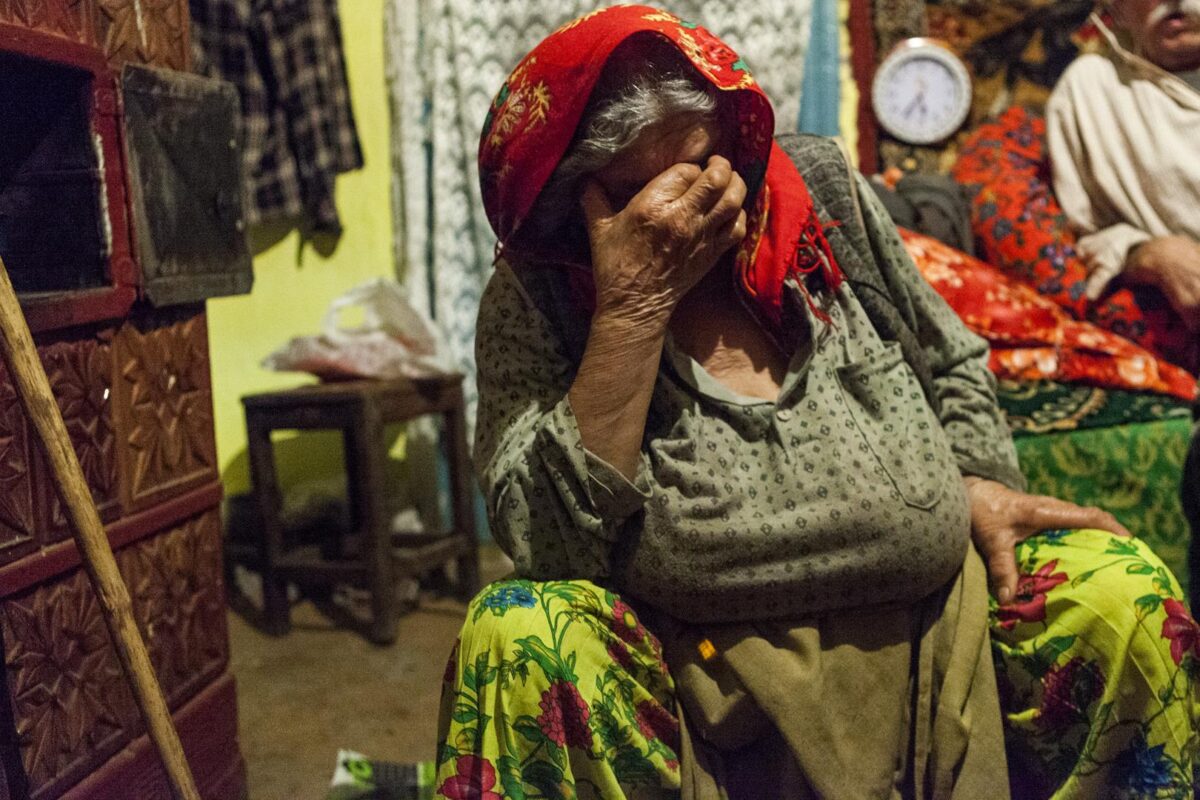
Diamanta Stănescu was deported, together with her family, in the summer of 1942, while she was in the commune of Grebănu. The Stănescu family was rounded up by gendarmes and sent under escort to Transnistria, following the Oancea (on the Prut)–Tiraspol route. The elderly members of the convoy of deportees who could not keep pace were executed by the escorting gendarmes.
Once she arrived in Transnistria, Diamanta Stănescu’s family was relocated, together with hundreds of other Roma deportees, to the Tiraspol region, and from 1943 near Domanevka and Kovaliovka (Ochakov County). Housed in squalid dugouts, stripped of the few belongings they had brought to Transnistria (confiscated by the gendarmes), and subjected to a regime of forced labor, many deportees perished from hunger, cold, and the typhus epidemic. Roma women who gave birth were forced to abandon their newborn children. The interviewee witnessed acts of violence (rapes) committed by German troops and Ukrainian guards. She was also present when German troops and Ukrainian guards carried out the mass execution of a group of Jewish deportees and threw them into mass graves. Later, the Stănescu family was relocated to Golta County.
The repatriation from Transnistria probably took place in the spring–summer of 1944, following the German and Romanian troops retreating in the face of the advancing Red Army. The interviewee’s aunt, together with her two children, was shot on the way back by German troops.
Brief note on a Roma subgroup:
The interviewee belongs to the căldărari (Roma specialized in metalworking).
Categories
Features
Regions
Video
Location
Related Testimonies

Added By Catalin Biban

Please sign in to see contact details.
 Română
  English