
 >
>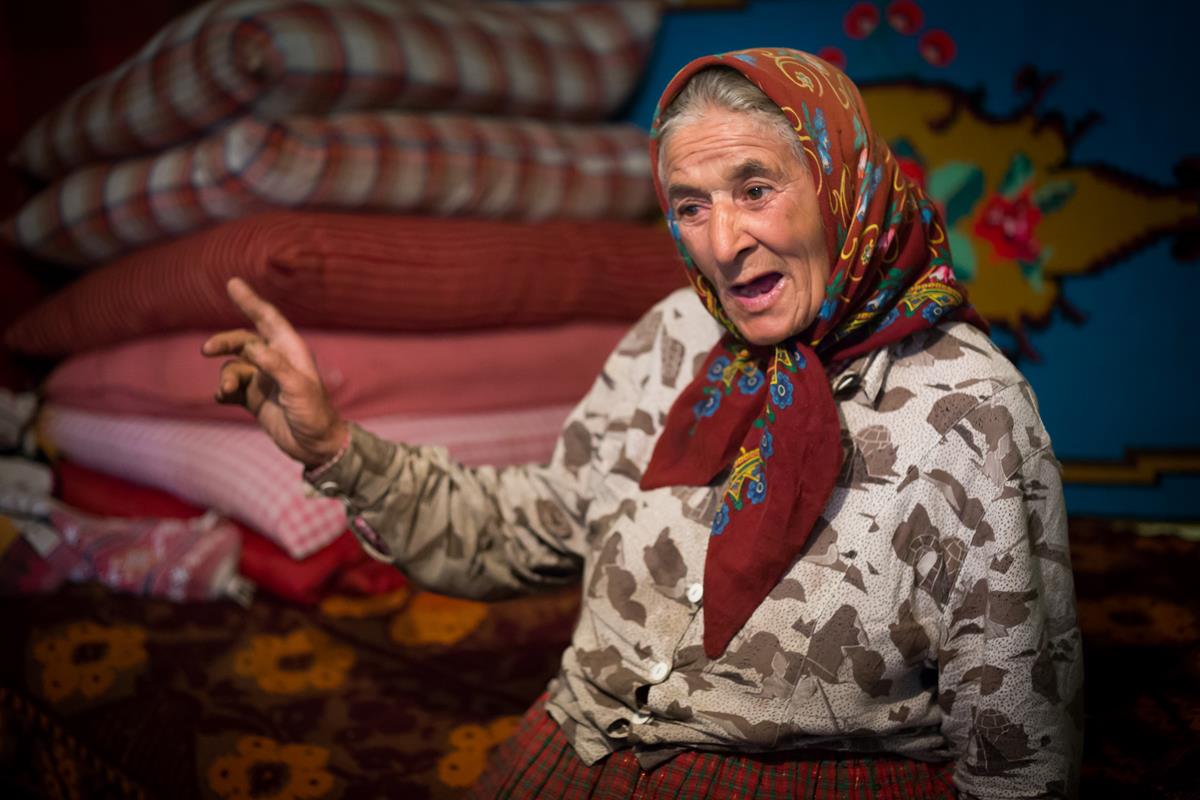
Name of the town: Cincu, formerly Cincu Mare (village, commune of Cincu)
Region, country: Brașov County, Transylvania region (Romania)
Date of deportation: June – August 1942
Excerpt from testimony:
“[…] At one point, the Roma [deportees] built themselves dugouts, but the Russians set them on fire. After this episode, the Roma were relocated to another kolkhoz, to some stables where they lived for three years. More than 300 Roma lived in those stables. Many died. Their bodies were thrown into ditches without being buried. Several members of the interviewee’s family—two brothers and her grandparents—died of hunger in Transnistria.”
Romanian archives (if they exist):
Unfortunately, no archival documents related to the Roma deported from Cincu have been identified.
Historical note on the Roma:
Cincu (formerly Cincu Mare; in German, Grossschenk; in Hungarian, Nagysink) is the seat of the commune of the same name, located 18 km from the town of Agnita. The village was founded by Saxon colonists in the middle of the 12th century and quickly developed into a regional administrative center (the seat of the Schenk Seat) and economic hub, where fairs were held periodically (Diaconovich 1898, I: 837). Over time, Hungarian, Romanian, and Roma families settled in the village. The 1850 population census recorded 2,368 inhabitants in the commune of Cincu, among them 1,475 Saxons, 808 Romanians, 331 Roma, and 1 Hungarian (SCT 1996, 84-85). The demographic situation changed in the interwar years, when 2,449 inhabitants were counted in the commune, among them 1,206 Romanians, 1,112 Saxons, 122 Hungarians, and only 3 Roma (RGP 1930, II.1: 192-193). According to the interviewee’s testimony, some 10 Roma families lived in Cincu in the interwar period. Owing to the exodus of the Saxon population in the postwar years, several Roma families were resettled in the village and received plots of land.
Historical note on the deportation:
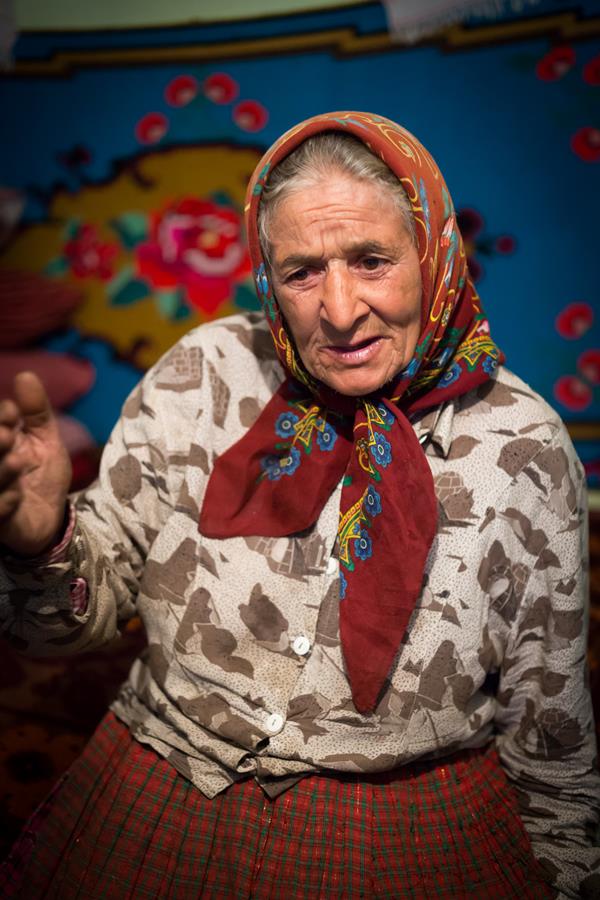
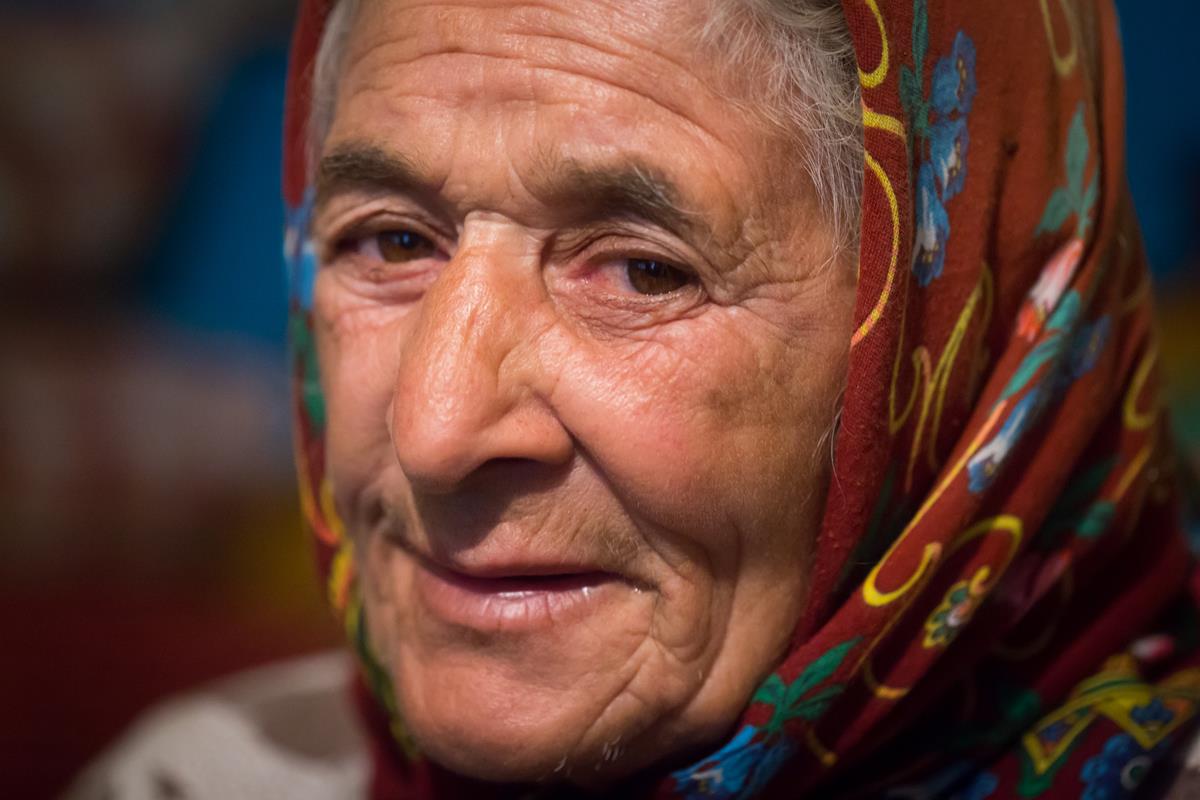
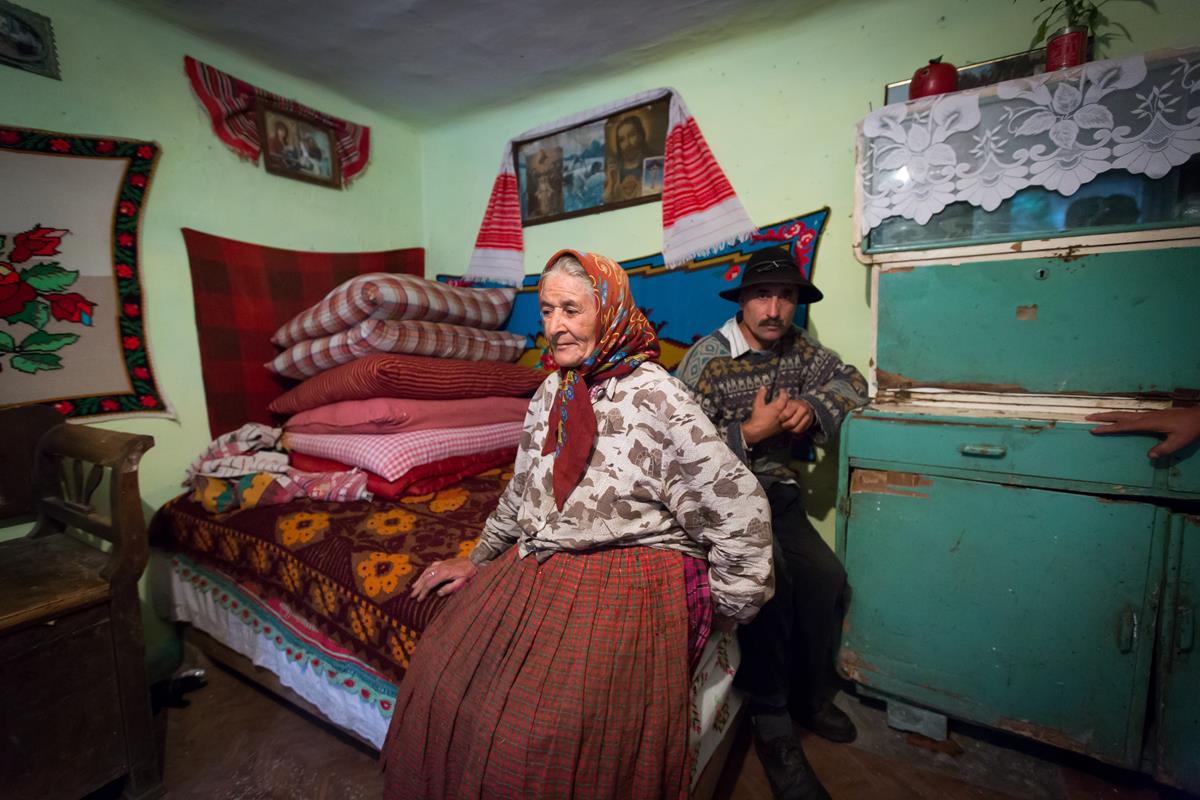
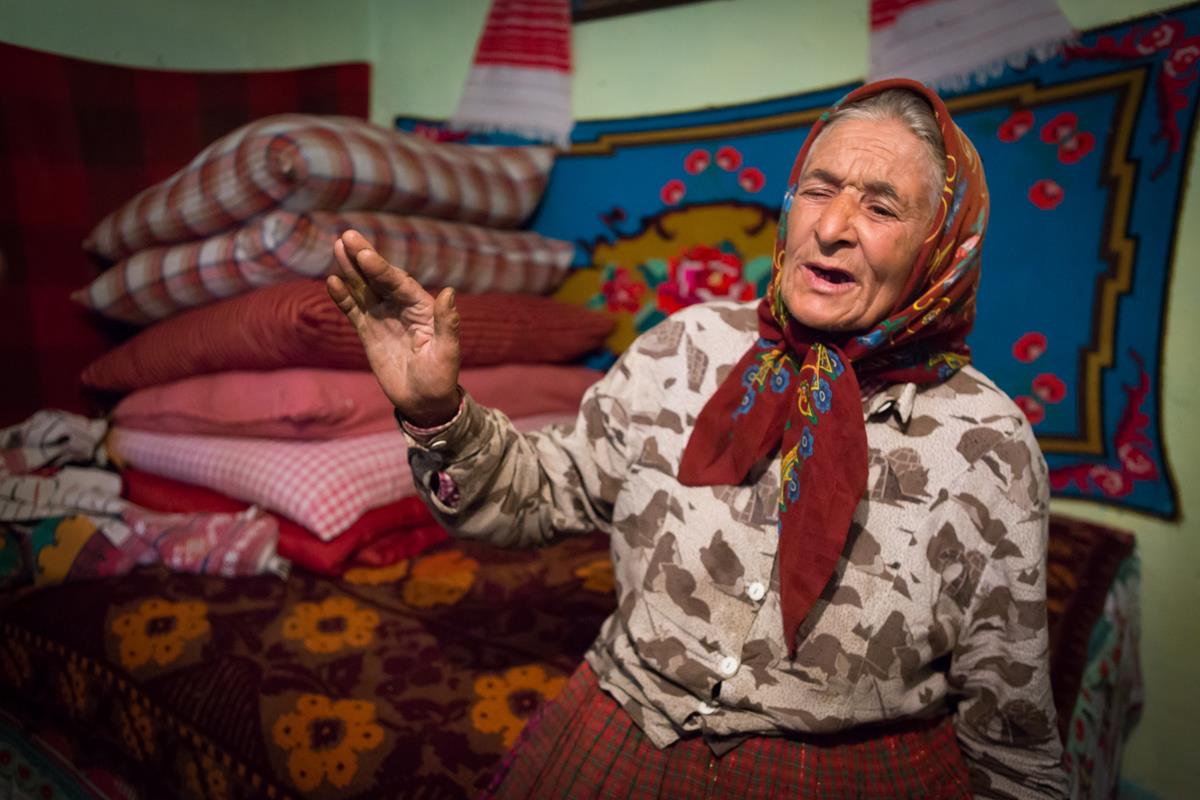
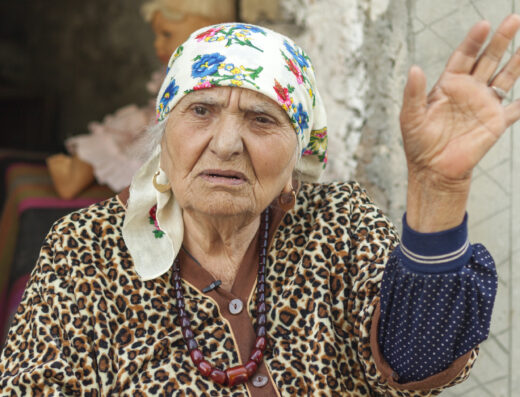
Sofia Căldăraru, together with her family (her parents and seven children), was arrested by the local gendarmes in the summer of 1942 and evacuated to Transnistria as part of the first wave of deportations, which targeted nomadic Roma. The gendarmes told the deportees to prepare to be resettled in Ukraine with their own carts.
The family probably arrived in Transnistria at the end of the summer of 1942. They were relocated to a kolkhoz, and their carts and animals were confiscated. The deportees were housed in stables near the kolkhoz (they slept on straw and drew their water from the Bug) and subjected to a regime of forced labor, receiving meager food rations in exchange.
After a time, Sofia Căldăraru’s family was transferred to another kolkhoz, where they remained for three years. Some 200 Roma were crammed into a stable, in squalid conditions and without sufficient food rations. As a result, many deportees died from the epidemics and from hunger, and their bodies were thrown into ditches and mass graves. Some of the deportees lost their lives in summary executions (some 30 to 40 Roma were shot by the Ukrainian guards).
The repatriation to Romania probably took place in the spring–summer of 1944. Sofia Căldăraru and her family benefited from the help of a certain Ana, who reportedly worked in a ministry (?) and is said to have intervened to put an end to the summary executions. The same person reportedly helped the Căldăraru family board a train and cross the border into Romania.
Brief note on a Roma subgroup:
Sofia Căldăraru belongs to the group of căldărari Roma (Roma specialized in metalworking). In the interwar years they led a semi-nomadic way of life (they had houses in Cincu but traveled through the villages of the region to sell their products).
Categories
Features
Regions
Video
Location
Related Testimonies
Added By Catalin Biban

Please sign in to see contact details.
 Română
  English